
Commercial Property Construction Costs Could Rise Sharply In Coming Years
Canadian commercial real estate developers could soon face a sharp increase in construction costs as demand for labour and materials grows across the country.
The cost of building in Canada is expected to rise much faster over the next two years. After increasing by about 2.5% this year, construction pricing could climb by roughly 4% in 2027 and 4.5% in 2028, according to a forecast from Turner & Townsend, a global construction consultant that is majority-owned by CBRE Group.
Canada’s relatively stable construction-cost environment may be nearing an end as Turner & Townsend expects more projects to move into the construction pipeline.. Developers spent much of the past year benefiting from subdued demand and intense competition among contractors for available work.
Governments are expected to spend roughly $115 billion on infrastructure projects over the next five years. Those projects will require more workers, more materials and more contractor capacity. A recovery in private-sector development would add even more demand to the market.
“As supply chains tighten and skills shortages exacerbate alongside growing activity, competition for labour and materials will likely apply upward pressure on bid prices,” Turner & Townsend said in its Canada Market Intelligence report.
The forecast represents a notable shift from conditions seen recently. Construction input costs increased 2.8% in 2025, while Canada’s construction sector expanded by 2.3%. Turner & Townsend said weaker demand in some sectors helped offset pressure from higher material costs and geopolitical uncertainty.
Industrial construction decline
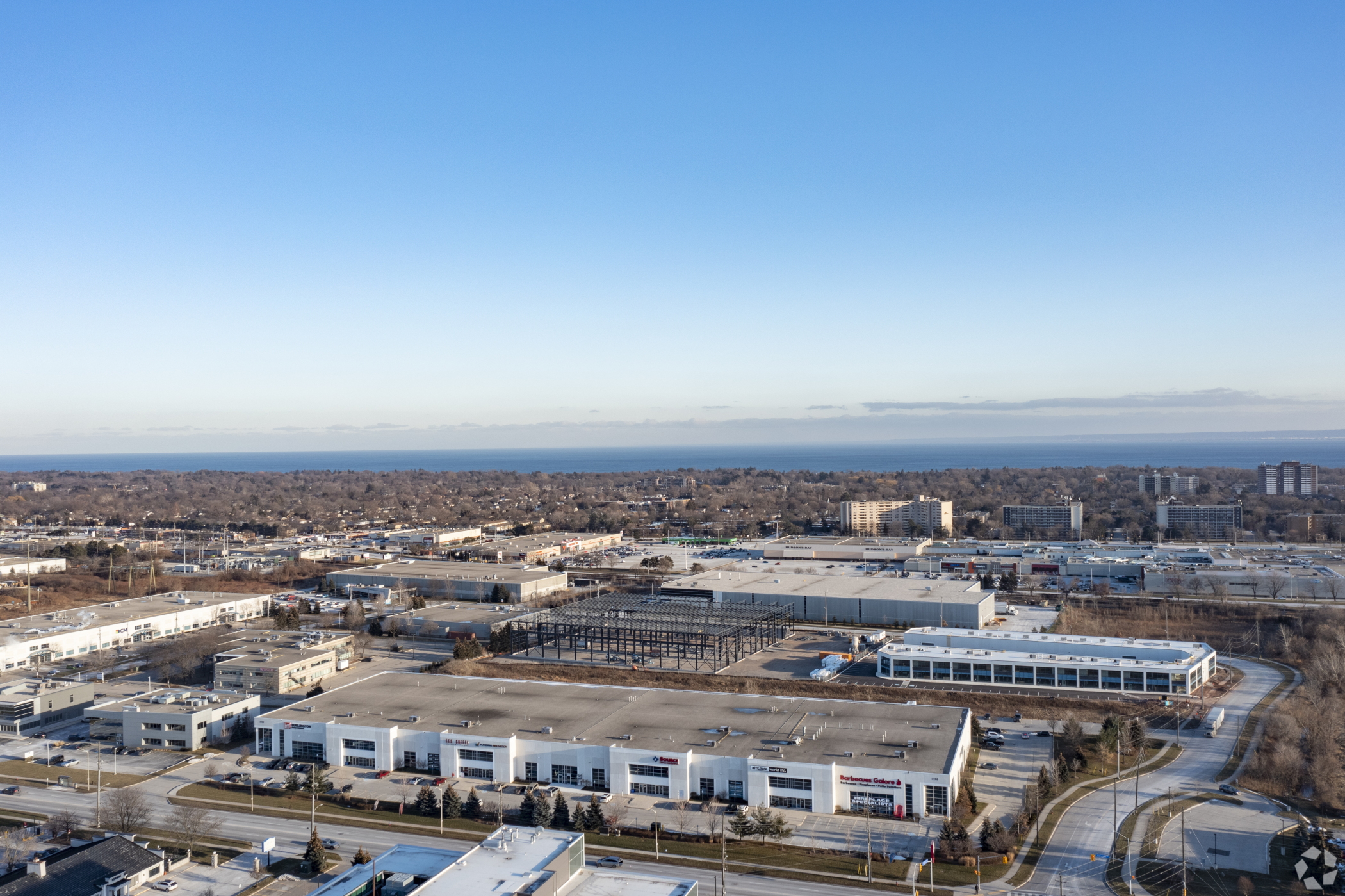
That softer demand was especially evident in parts of the commercial real estate market. Industrial construction investment fell 7.3% in 2025 after several years of rapid warehouse and logistics development, while commercial construction investment declined 2%. Turner & Townsend cited investor caution, financing challenges and continued uncertainty in office markets.
Other parts of Canada’s construction industry remained much busier. Residential investment increased 7.6%, led by apartment and condominium projects, while institutional and government-related construction grew 5.7% as spending on health care, education and public infrastructure continued.
Ontario is forecast to see construction-cost growth of 2% to 3% in 2026 before costs accelerate to 3.5% to 4.5% in 2027 as transit, nuclear and other major infrastructure projects add to demand. Quebec’s forecast ranges from 2.5% to 3.5% this year and 3.5% to 4.5% in 2027, supported by projects including the Quebec City tramway, Montreal airport expansion and the Port of Quebec’s Project K.
British Columbia is expected to benefit from transit, health-care and education projects that could support construction-cost growth in the 3% to 4% range.
In Alberta, Turner & Townsend said industrial activity could strengthen if energy-sector investment and pipeline-related work increase, though the province’s construction-cost outlook remains somewhat more moderate at 2.5% to 3.5% through 2026 and 2027.
Turner & Townsend expects government infrastructure programs to become more visible in construction pipelines over the next several years, while private investment could begin moving ahead as trade conditions improve. “Competition for labour and materials will likely apply upward pressure on bid prices,” the report said.
Source Costar Click here for the full story.