
Construction Set To Start Next Year On One Of North America’s Largest Redevelopments
Site preparation at Northcrest Developments’ YZD project, touted as one of the largest redevelopments planned in North America, is underway following last year’s zoning and subdivision approval and construction on its Hangar District is expected to begin in early 2027.
The $30 billion YZD project at the 370-acre former Downsview Airport lands is being developed from scratch by Northcrest, a subsidiary of the Public Sector Pension Investment Board, a Crown corporation.
The redevelopment plans call for subdividing the one giant parcel into separate sections, to be completed in phases. Upon completion, YZD is expected to add seven new neighbourhoods containing a total of 35,000 new homes in Toronto and create more than 20,000 jobs.
Northcrest said it will go to market this year to find a contractor to begin infrastructure work next year. Last summer, it appointed Beau Brooker, its vice president of construction, to manage contractors and subcontractors responsible for executing the redevelopment project. Brooker previously oversaw construction at the $2.5 billion ICE District in downtown Edmonton and then assumed the same role for residential high-rise builder Edenshaw Developments Ltd.
Given YZD’s projected two- to three-decade buildout timeframe to create what will effectively be a sustainable minicity, the project likely will be susceptible to the market’s vagaries due to the cyclical nature of real estate. Northcrest CEO Derek Goring told CoStar News that bringing such an ambitious project to fruition may necessitate government assistance, if only through ‘loosening the screws,’ in terms of taxes and fees.
“Governments have a role to play in looking at taxes and fees and the role those play in driving up construction costs,” Goring said. “It’s not one thing; it’s a whole bunch of things that have to happen in order to get projects to pencil in the short term.”
Goring added that, while current market conditions for housing may be inauspicious, the city is underpinned by indomitable fundamentals such as continued population growth. Greater Toronto has for years been one of North America’s fastest-growing metropolitan regions, and that is partly buttressing Northcrest’s confidence in YZD’s viability, even with its very long-term horizon.
“We do remain very bullish on the project and on the city of Toronto. The city continues to be a very vibrant and thriving place, notwithstanding a lot of what you hear in the media today, so we very much believe in Toronto and the project,” Goring said.
YZD reflects Canada’s growth
In fact, Goring said, the protracted building timeline “allows us to think a bit differently than other people do, but we do have to make individual investment decisions on a case-by-case basis, and it affects the timing of things. All other things being equal, we can ramp up production during good times and likewise potentially slow them down when times aren’t good in order to align with market conditions at the time. But there are things you can do to compensate.”

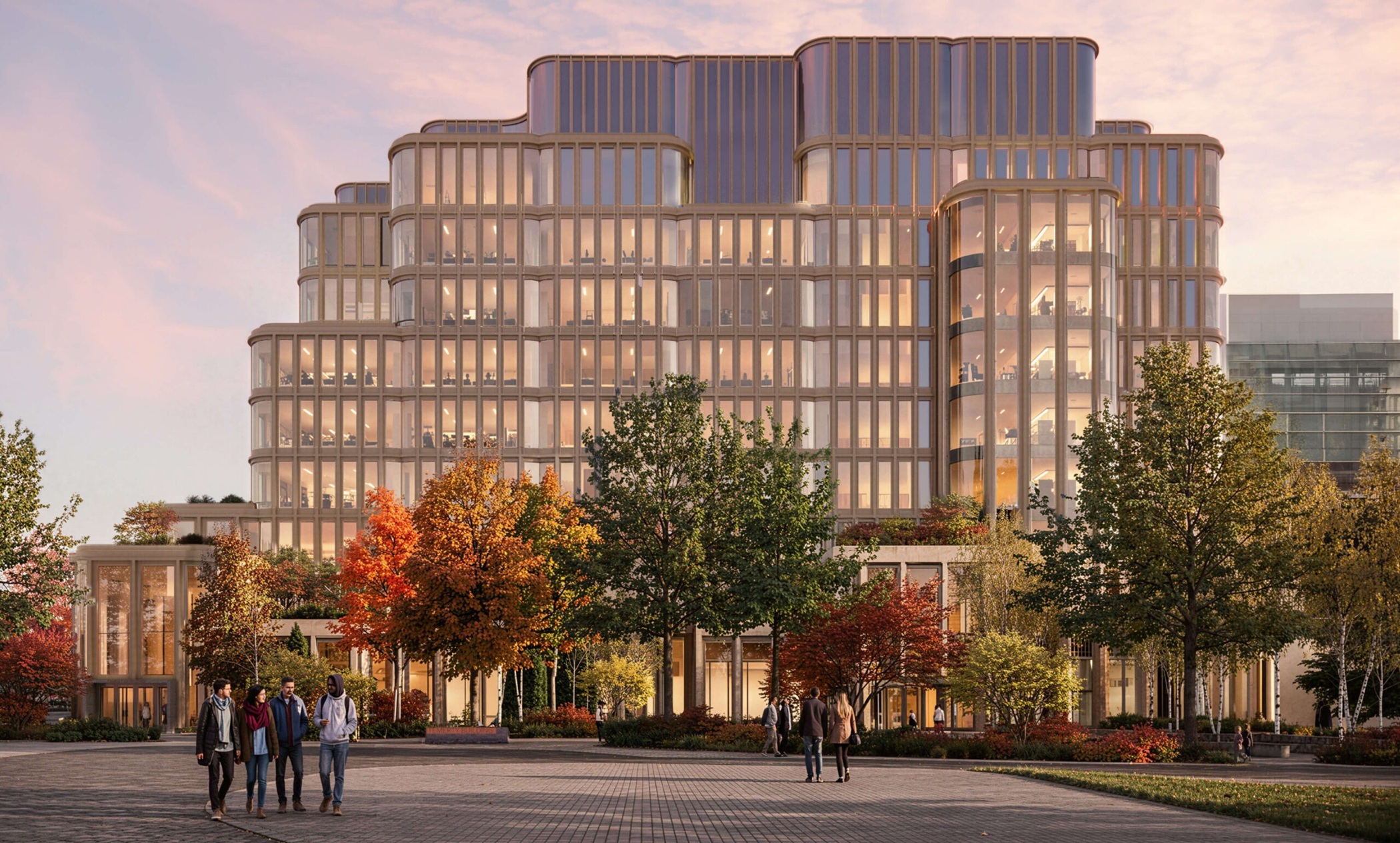
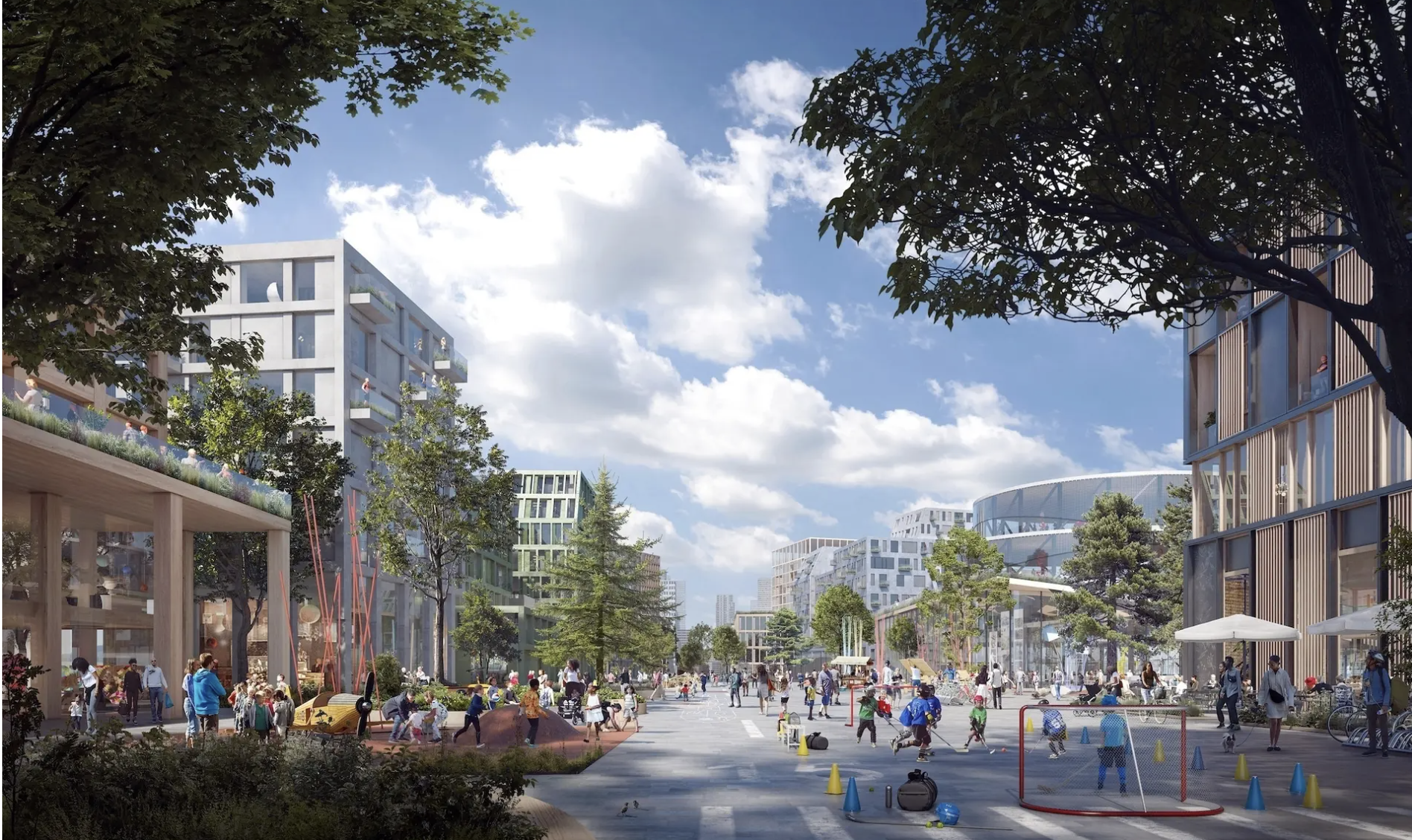
The project could prove to be one of the most transformative projects in the city’s history. If all goes as planned, YZD will be an expansive community unto itself, replete with retail, restaurants and entertainment, community centres, schools and parks, as well as a two-kilometer pedestrian runway.
The inaugural phase of YZD is the Hangar District. This area is slated to add almost 3,000 new homes, including townhouses and 14-storey apartment buildings, for rental and ownership, 40% of which will be family-sized. There will also be roughly 7,000 jobs, ultimately located in the Hangar District, in what Northcrest anticipates will be creative industries.
Goring said the future growth of Canada necessitates developments of monumental scale like YZD. And while PSP, one of Canada’s largest pension funds, owns Northcrest, he said the development is expected to make a return on investment. To that end, Goring points to the most salient fundamental.
“Net migration to Canada is another big data point that we look at, and is an important part of the future success of a project like this,” he said. “And even though, in the short term, there’s been a significant decline in immigration, I think it’s because the government’s recognized that we don’t currently have the infrastructure to support that much immigration.
“My hope is that as we start to build more housing, to close the gap, that will allow governments to bring more immigration in in a balanced way that allows us to match the supply of housing with the demand for new population over time.”
Source Costar Click here for the full story.