
Hotel Construction Pipeline In Canada Nears 48,000 Rooms
Canada’s hotel development pipeline continues to grow as developers pursue numerous projects, particularly in the country’s largest urban centers, even as many projects are advancing more slowly from concept to completion.
Higher construction costs and longer development timelines continue to create friction between what is planned and what ultimately gets built.
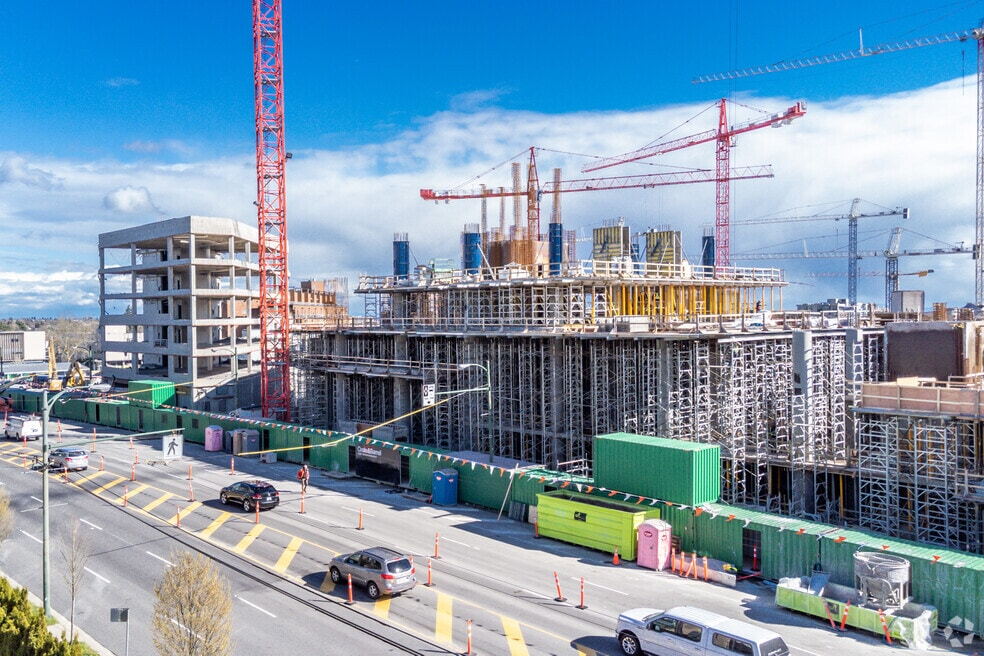
At the end of July, around 48,000 hotel rooms were listed in the active development pipeline, equivalent to 10.5% of Canada’s existing hotel room supply. However, only just over 9,000 rooms were actively under construction. Another 13,000 rooms remained in the final planning phase, while 25,500 rooms, more than half of the pipeline, remained listed in the basic ‘planning’ category.
The imbalance suggests that developers remain interested in pursuing hotel projects, but a growing number are winding their way through approvals, financing and other hurdles before beginning construction.
The contrast between the number of hotel rooms in the development pipeline and actual supply growth is equally notable. A total of 4,500 hotel rooms have opened in Canada through July, increasing the national hotel supply by approximately 0.5%. The number of rooms in the planning phase increased by just under 4%. In many markets, operators continue to benefit from a relatively limited influx of new hotel competition, but their continued strong performance likely supports the long-term investment case for more hotel development.
As one would expect, hotel development remains heavily concentrated in Canada’s largest economic centers. Ontario accounted for 24,000 rooms in the development pipeline, or just over 50% of the national total, while British Columbia accounted for another 15,000 rooms, or 31.5%. Together, the two provinces accounted for more than 80% of all hotel rooms in development. Both provinces continue to show steady population counts, business investment and international visitation, giving developers confidence that future demand will support additional hotel supply.
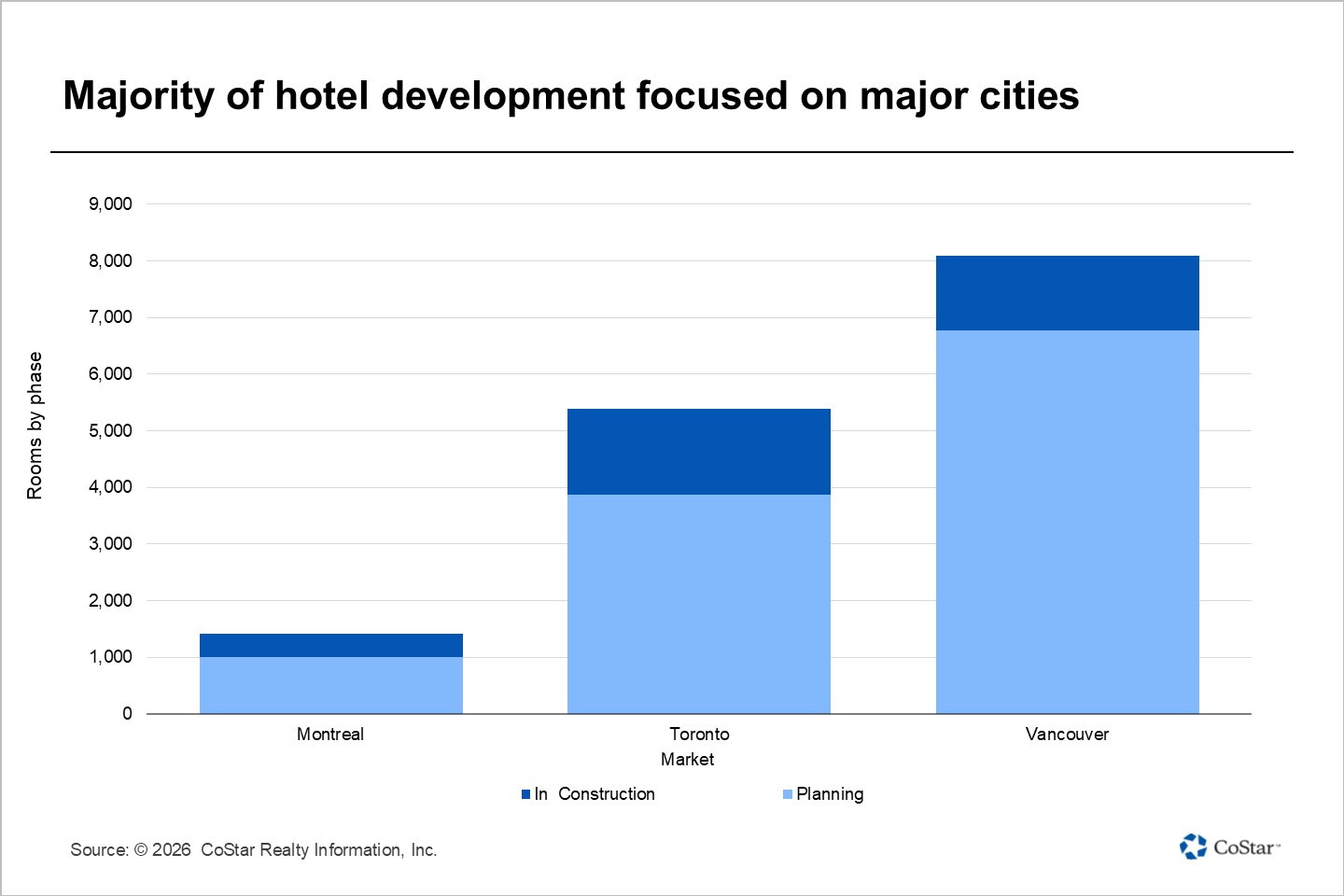
Within the provinces, major gateway markets remain the primary focus for hotel development. Vancouver’s pipeline reached approximately 10,500 rooms, equal to nearly 40% of existing supply, while Toronto’s pipeline totaled roughly 7,000 rooms, representing nearly 19% of inventory. In both markets, high barriers to entry and years of relatively constrained supply growth have encouraged developers to continue pursuing new projects.
The composition of the pipeline also reflects a strong preference for limited-service hotels. Upper-midscale and upscale hotels also account for a significant share of hotel development activity, offering a balance between construction costs and stronger operating margins than full-service hotels. Luxury hotel developments, which can cost between $600,000 and $800,000 per room to build and often need a condominium component to pencil out, remain comparatively limited, accounting for less than 4% of hotel rooms in the development pipeline.
Canada’s development pipeline reflects sustained confidence in the sector, but the primary challenge remains development execution. The large concentration of hotel projects in planning suggests that future supply growth will depend on developers’ ability to navigate the financing, construction and entitlement hurdles facing projects in the development pipeline.
As long as hotel supply growth remains constrained and room demand remains supportive, the pipeline is likely to remain robust, even if the pace of new openings continues to lag new proposed projects.
Source Costar Click here for the full story.