

Short‑term Household Cash Outlays May Mask Long‑term Retail Risk
Retail spending across Toronto has remained surprisingly resilient despite a clear deterioration in economic conditions.
When adjusted for both inflation and population growth, overall retail spending remains broadly in line with 2019 levels, suggesting stability at the headline level. However, this resilience appears to reflect a reallocation of household spending, rather than underlying financial strength.
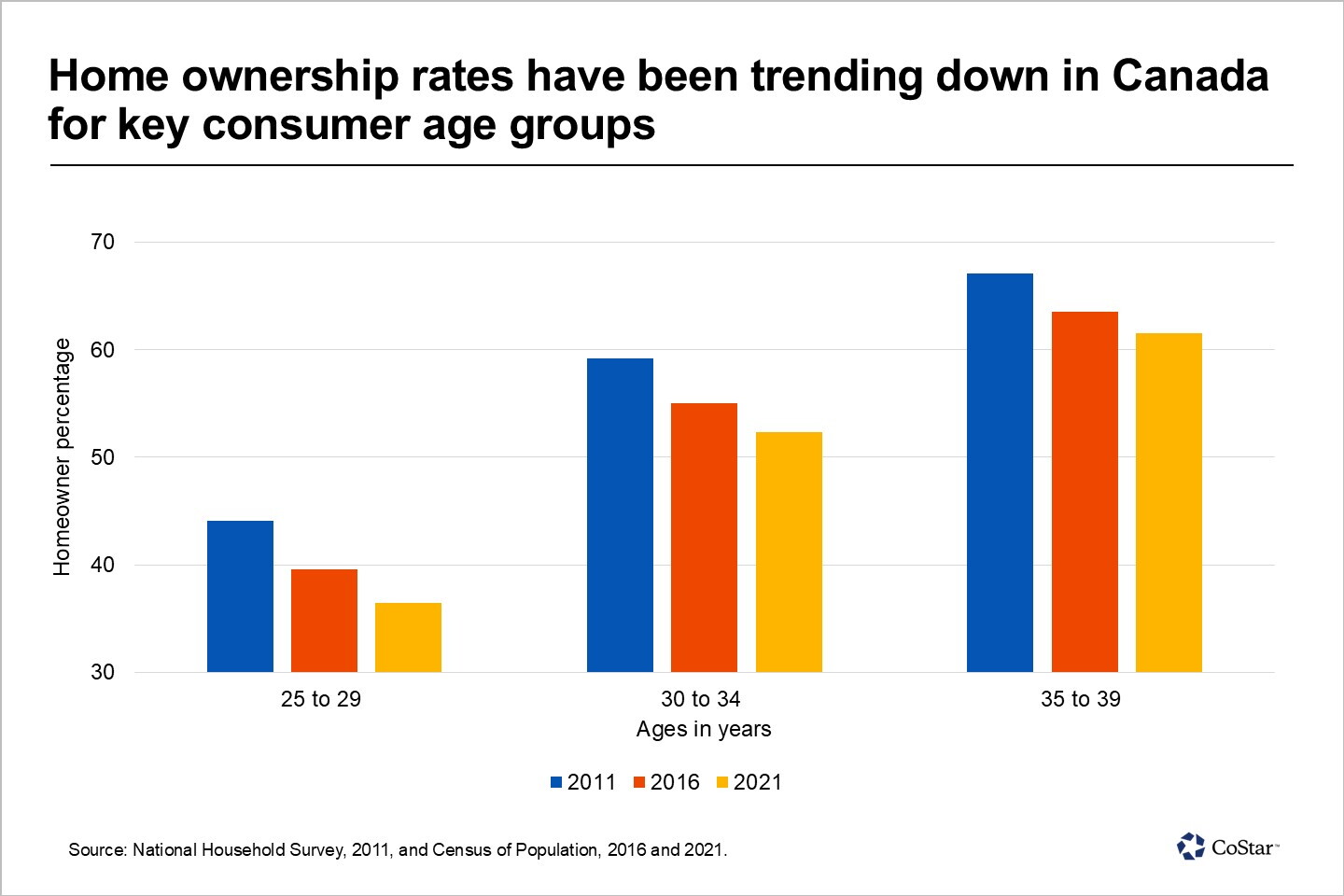
Persistently unaffordable housing has pushed large segments of the population out of homeownership and, critically, out of mortgage payments. With fewer households directing income toward down payments or mortgage contributions, discretionary spending has been temporarily supported by what is increasingly described as “doom spending.”
In this context, the phrase refers to consumers prioritizing short-term consumption, such as travel, dining, apparel and experiences, over deferred financial goals that now feel unattainable.
This behavioural shift has helped sustain near-term retail sales, particularly in discretionary categories. However, it does not represent durable demand growth. Instead, it reflects a short-term coping mechanism that is highly sensitive to labour market conditions and confidence. Once employment security weakens, this form of spending typically retrenches quickly.
Doom spending can mask emerging stress in traditional retail metrics. Stable sales volumes may coexist alongside weaker store productivity when coupled with an increasing reliance on promotions. As a result, headline resilience should not be mistaken for a healthy demand outlook.
While grocery-anchored and necessity-based formats continue to benefit from inelastic demand, discretionary retail appears increasingly reliant on a behavioural response that lacks long-term staying power.
As economic conditions soften and households become more cautious, the spending patterns propping up parts of the retail market are likely to unwind, setting the stage for a more pronounced adjustment.
Source Costar Click here for the full story.